
Japandi Flooring: How to Bring Calm Minimalism to Your Home
Table of Contents
- Summary
- What Japandi actually asks of a floor
- Choose light over dark: why limed and whitewashed oak suits Japandi
- The negative-space test: choose plank format before colour
- Read the light in your room before you pick a tone
- Japandi room by room
- The two-wood rule that keeps a scheme coherent
- Start with the floor
Most guides to Japandi start with the walls, the ceramics and the low furniture. The floor gets mentioned last, if at all. That order is backwards. Your floor is the single largest area of space in a Japandi room, which makes it the quietest and most consequential decision you will make. Get Japandi flooring right, and everything you place on top of it can breathe. Get it wrong, and no amount of clever styling will settle the space. This guide is about choosing that floor, not decorating around one you already have.
Summary
-
Japandi is a fusion of Japanese warmth and Scandinavian restraint, built on negative space, natural materials and a muted palette.
-
Treat your floor as negative space, not as a feature: choose calm over character.
-
Light, limed, and whitewashed oak suits Japandi better than dark, smoked or glossy wood.
-
Pick plank format before colour. Long, wide, straight boards read as calm; busy herringbone competes with it.
-
The Climate collection is built for this look, with limed and bleached oak in soft greige and grey tones.
What Japandi actually asks of a floor
Japandi is where Japanese design and Scandinavian design meet in the middle. From Japan, it takes warmth, imperfection and a respect for empty space. From Scandinavia, it takes light woods, clean lines and function without fuss. Put simply, Japandi style interior design is calm made visible.
The important part for flooring is the role of emptiness. In Japanese interiors, there is an idea of the meaningful pause, the space between objects that gives them room to be seen. Your floor is that pause, scaled up. It is the largest uninterrupted surface in the room, so its job is not to perform. Its job is to hold everything else quietly.
That single principle changes how you choose. You are not looking for the most beautiful plank in the showroom. You are looking for the one that asks for the least attention while still feeling warm underfoot.
Choose light over dark: why limed and whitewashed oak suits Japandi
The default advice for a calm, natural floor often points towards smoked or deeply toned oak. For Japandi specifically, lighter tends to win. Pale wood reflects daylight, keeps the room feeling open and lets the floor recede rather than anchor the eye. Dark floors do the opposite: they frame and ground a room, which is a lovely effect, but it pulls attention downward and shrinks the sense of air that Japandi depends on.
This is where limed and whitewashed oak earns its place. Liming lightens the tone and lifts the natural grain, so you keep the texture of real timber without the visual weight of a dark stain. The result is a floor that feels soft, airy and quietly rustic, which is exactly the register Scandinavian wooden flooring is known for.
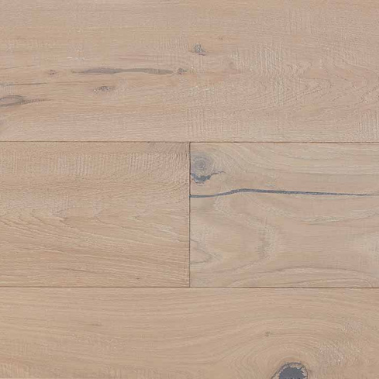
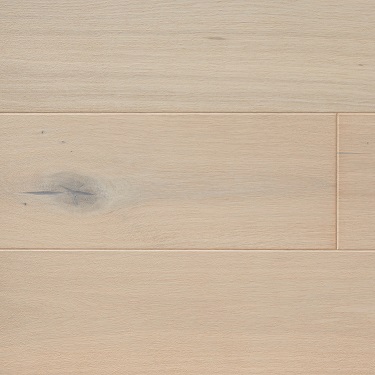
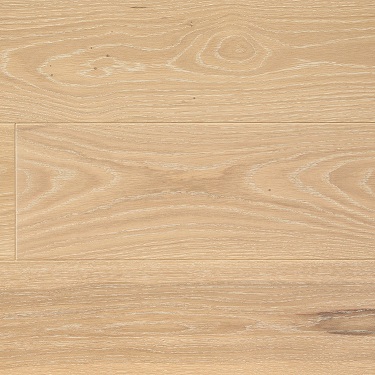
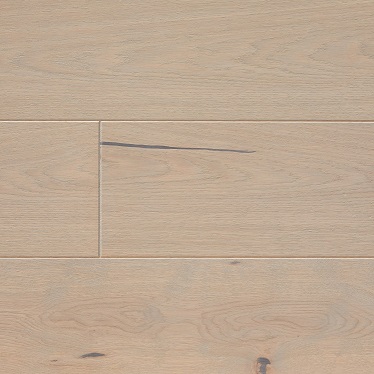
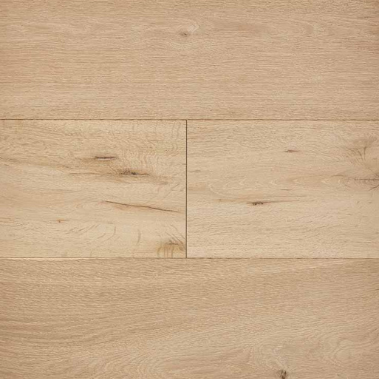
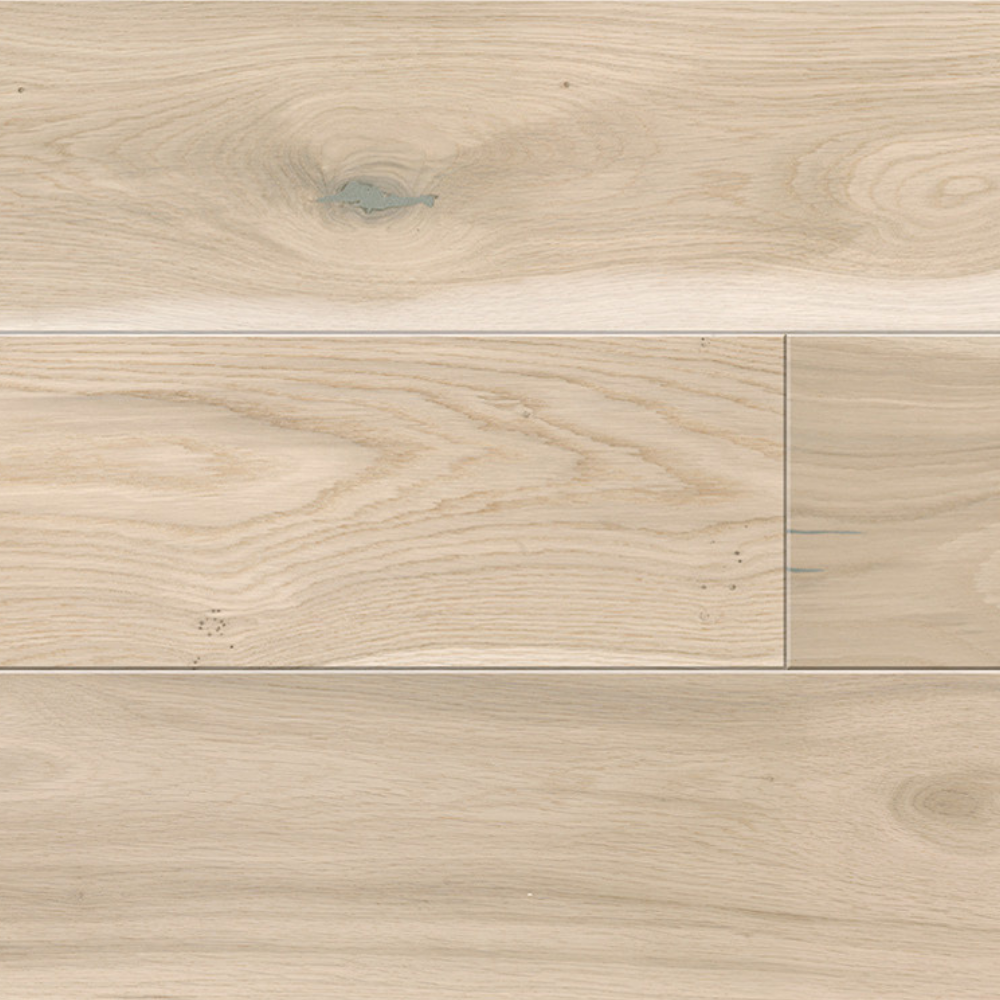
The Climate collection is designed around this idea. It brings together bleached, weathered and limed oak in soft greige and grey tones, with visible splits and knots that give a gentle, lived-in character. Manoa Oak is a good example: a chalky, brushed finish where the grain seeps through rather than shouts, making it a natural fit for Scandi minimalist rooms.
The negative-space test: choose plank format before colour
Here is the step most people skip. Before you settle on a colour, decide on the shape and layout of the boards, because format affects calm more than tone does.
A repeating pattern, such as herringbone or chevron, creates rhythm, and rhythm draws the eye. That is wonderful in a period hallway. In a Japandi room, it works against you because the floor starts to compete with the emptiness you are trying to protect. Long, wide, straight-laid boards do the opposite. They read as one continuous plane, which is precisely what negative space should do.
Use this simple test when you are comparing samples and layouts.
| Decision | Keeps the floor calm | Pulls focus |
| Plank layout | Long, straight, single-direction boards | Herringbone or busy parquet |
| Board width | Wide and consistent | Narrow strips or mixed widths |
| Grain and knots | Subtle, low-contrast, limed | High-contrast, heavy character |
| Tone | Pale limed, greige, soft grey | Deep, glossy or red-toned |
| Finish sheen | Matt lacquer or natural oil | High gloss |
None of the choices on the right are wrong in themselves. They are simply louder, and Japandi rewards quiet. If you find yourself drawn to a striking parquet, that is a signal the space wants a different style, which is worth knowing before you order.
For Japandi and Scandi-rustic interiors, we often see homeowners favouring straight-laid oak flooring over parquet because it delivers a quieter, more harmonious backdrop that perfectly supports the clean lines, natural materials and uncluttered aesthetic these schemes are renowned for. While parquet introduces pattern and visual interest, Japandi design is rooted in restraint, balance and a strong connection to nature. Straight planks create a sense of openness and flow, allowing the beauty of the timber’s grain and soft, light-enhancing tones to become the focal point without overwhelming the space.
“A standout choice for achieving this look is Atkinson & Kirby Manoa Oak Engineered Wood Flooring. Installed in a straight-laid format within an open-plan kitchen, its chalky, limed finish softens the overall scheme while allowing the delicate oak grain to gently show through, adding warmth and authenticity. The light-reflective surface helps brighten the room and reinforces the airy, organic feel associated with Scandinavian-inspired interiors”. - Stuart Cottle, Product Manager
Read the light in your room before you pick a tone
Two rooms can take the same plank and look completely different, because light changes how a pale floor behaves. This is a quick check that saves a lot of second-guessing, and it matters more in the UK, where natural light runs cooler for much of the year.
| Your room's light | A tone that tends to work |
| Bright and south-facing | The coolest bleached and whitewashed whites. We recommend Baltra Oak. |
| North-facing or cooler light | Warm-limed or greige oak, to avoid a cold grey cast. We recommend Tanami Oak. |
| Low light or a small room | Pale, chalky oak that bounces what light there is. We recommend Manoa Oak. |
The mistake to avoid is choosing a very cool grey floor for a north-facing room. Without warm daylight to lift it, that grey can read as flat and clinical, which is the opposite of the effect you want. A greige or gently warmed lime keeps the room calm without tipping into cold. If your space struggles for light, such as a conservatory on a dull day, the palest chalky oaks give you the most lift.
Japandi room by room
The principles hold across the home, but each room has its own quiet demands.
Minimalist kitchens
A Japandi kitchen leans on flat-fronted, handleless cabinetry and clear worktops, so the floor is often the most visible material in the room. Run your boards along the main sightline, usually towards the window or the length of the space, to reinforce that sense of one calm plane. Engineered oak is the practical choice here, since its layered construction copes better with the temperature and moisture swings of a working kitchen than solid timber. Discover which flooring type is best for you in our blog. A matt lacquer finish keeps the surface easy to wipe while holding the low-sheen look that minimalist Scandinavian kitchen design relies on.
Living rooms
The living room is where Japandi is most tempted into clutter, so let the floor do the grounding. A limed or greige oak, like Mojave limed oak, gives you a warm, low-contrast base that flatters low sofas, floor cushions and natural textiles without darkening the room. This is the heart of a Scandinavian minimalist living room: a floor that quietly connects everything rather than dividing the space into zones.
Bedrooms
In the bedroom, warmth underfoot and softness to the eye matter most. The palest tones like Seba Oak in the range suit a room designed for rest, and the subtle knots and splits of a rustic-grade oak like Rasselas Oak add just enough character to feel natural rather than sterile. This is Scandi rustic style at its most restful, a floor that feels handmade without being busy.
The two-wood rule that keeps a scheme coherent
If there is one habit that separates a considered Japandi room from a muddled one, it is discipline with wood tones. A common misstep is pairing a pale Scandi floor with several different mid-brown furniture woods, which quickly turns calm into clutter.
The fix is simple. Give the room two wood temperatures and no more: one cool or pale wood, and one warm accent wood. Let your floor be the cool, quiet constant, and let a single warm timber carry through the furniture. This is simplicity by design, and it is why so many Scandi flooring ideas begin with the floor and work outward, rather than the other way around.
Restraint is the whole point. Japandi is not about owning less for its own sake. It is about choosing carefully, so the few things you keep are given room to be seen. Your floor sets that tone before a single object is placed on it.
Start with the floor
Everything in a Japandi room is easier once the floor is settled, because the largest surface is already working in your favour. Choose light over dark, format before colour, and let the wood stay quiet.
Explore the limed, bleached and whitewashed oak in the Climate collection to find the calm foundation your space is built on, or browse all of our collections to compare the full range. When you have a shortlist, request a sample and see how it reads in your own light before you commit.
Mentioned Products
Related Collections
Manufacturer and supplier of premium hardwood flooring, Atkinson & Kirby, has relocated its headquarters to Chirk, North Wales, joining the company’s existing onsite manufacturing and distribution facility. As part of the ongoing development of the company, Atkinson & Kirby has relocated its office headquarters to join its existing manufacturing and distribution facility in Chirk. The move will improve both the service and quality of products by having all staff in one location, unifying working relationships between all departments, from marketing to distribution, as well as improving efficiency, customer service and delivery. Atkinson & Kirby still retains its office and distribution in Livingston. Tradition is an integral part of Atkinson & Kirby and the company is proud to remain one of a few British manufacturers of hardwood flooring, with a selection of solid flooring being produced in its Chirk mill. Tony Miles, CEO of Atkinson & Kirby, comments: “The consolidation of all offices to Chirk is a big move and demonstrates just how serious we are about British manufacturing and sustainability. “We are FSC® certified and take pride in the quality of wood we supply, with rigorous inspections at various stages of production, making sure the wood is always from a sustainable source. “We are a family business and above all, excellent quality and customer service are our priority. The move is already proving successful, with a unified workforce, improved communication and efficiency.
READ ARTICLEChoosing flooring for your home is no longer just about how it looks or how durable it is. Many homeowners are rightly asking, ‘Is vinyl flooring toxic?’ and looking more closely at how different indoor materials affect the space's air quality. In our latest guide, we explain what non-toxic flooring means, how VOCs and off-gassing work, and which flooring options are generally considered safer for your home. Is flooring toxic? Vinyl flooring can release VOCs, especially in lower-quality products or older materials, although modern flooring options are typically lower-emitting. Laminate flooring may contain adhesives that emit formaldehyde, depending on how it's manufactured. Solid hardwood flooring is considered the safest option because it's made from natural timber and can be low in VOCs. Engineered wood flooring can also be low in emissions, but it depends on the core construction and finish used. Off-gassing is usually most noticeable shortly after installation and reduces over time. Fancy speaking to our team? Get in touch with them today to discuss your flooring projects or order a sample. What is toxic flooring? Some forms of vinyl and laminate flooring are considered to be toxic. This is because certain types can contain reprocessed plastic and other toxic chemicals, including cadmium, toxic phthalates and lead. These flooring materials can give off toxic fumes that can impact air quality through a process called off-gassing. By contrast, natural building materials and healthy flooring are made with products that are free from harmful chemicals. These types of flooring - including natural stone and wood floors - are considered 'low VOC' (Volatile Organic Compounds). Sometimes, even those who shop carefully and make lifestyle choices to build a 'chemical-free house' can find that they've overlooked their flooring manufacturers and products. What is off-gassing? In simple terms, off-gassing is the process by which dangerous chemicals are released into the air. An easy-to-recognise example might be the smell of wet paint - when you sniff that recognisable scent, it means the chemicals in the paint have risen into the air. Of course, some smells and fumes are harmless to our health, but others - particularly those with dangerous chemicals or toxins - can have a serious impact. Who is at risk from off-gassing? Anyone can be affected by the toxic chemicals in certain flooring and building materials. However, typically, babies and young children are among the most susceptible to the effects of toxic air quality. Adults and those with weakened immune systems or respiratory issues can also experience strong symptoms from inhaling the fumes. In the case of toxic flooring - for example, certain types of vinyl floors - it's likely that anyone who spends a lot of time close to the material itself will be the most affected. This can mean toddlers crawling around, as well as pets. What are Volatile Organic Compounds (VOC)? Volatile Organic Compounds (VOCs) are gases that are emitted into our air from various products. They can be standalone harmful chemicals that are dangerous on their own; sometimes, VOCs react with other gases or chemicals to create other pollutants. In flooring material, VOCs can commonly be found in products like stains, varnishes, adhesives and certain finishes. Natural materials - such as solid wood flooring or hardwood flooring - are generally classed as 'low-VOC'. High levels of exposure to VOCs can be harmful to the environment and health. What are formaldehyde emissions, and how do they relate to low-VOC flooring? Formaldehyde emissions are some of the most common VOCs. The Environment Agency classifies formaldehyde fumes as a 'probable human carcinogen'. Formaldehyde is sometimes used for its bonding qualities, so formaldehyde can be found in plywood, top coats, vinyl adhesive and more. It can irritate the eyes, nose, throat and skin. Significant exposure can also cause cancer. Once you know to look out for formaldehyde fumes, you'll be able to identify which flooring is the safest and best to use. A product labelled as ULEF (ultra-low emitting formaldehyde) is certified at the highest category and is the best choice for homes, though it likely contains formaldehyde, it emits fumes at extremely low levels. Formaldehyde can also be found in the emissions from vinyl flooring adhesive and the base layer of many laminate flooring types. A product labelled NAUF (no added urea formaldehyde) is essentially the next best thing. These products don't use urea formaldehyde, which causes the fumes to be released for the entire life cycle of the product. Instead, these products use alternative glues and release around 90% fewer formaldehyde emissions. The 7 most common flooring types Below, we look at some of the most common flooring types and how they compare in terms of toxicity, VOC emissions, and how suitable they are for a healthy home environment CARPET Carpet has traditionally been a popular choice of flooring. As we become more aware of the health risks associated with carpet flooring, many people are searching for more natural, eco-friendly flooring options, also known as green flooring options. There are many areas in which harmful chemicals could be used within synthetic carpet, including the dye used to colour the carpet, adhesives used to bind carpet fibres, and the dangerous chemicals used to create resistance to stains. New carpet installation is a large contributor to indoor air pollution - a recent EU study identified over 59 hazardous substances found in carpets. Synthetic carpet can hold these dangerous chemicals for months, if not years. However, there are ways to limit exposure. If you are set on choosing a carpet or a rug for your home, place the rug outdoors or in a well-ventilated area for at least a week, as the first few weeks are when the carpet expels the most toxic fumes. Natural fibre carpets, such as wool or sisal, are widely considered a lower-toxicity alternative to synthetic options because they are treated with the same chemicals. HARDWOOD FLOORING Hardwood flooring is widely considered one of the safest and least toxic flooring options, as it's made from natural timber, which contains fewer synthetic materials than its alternatives. There are two types of hardwood flooring, solid or engineered. When installing hardwood floors, the most common option is to glue the floor down. There are many safe, non-toxic glue options that you can use. Speak to your installer about sourcing non-toxic glue. Alternatively, flooring profile options have advanced, including 5G click, which simply clicks together, allowing you to ‘float’ the floor, without requiring glue. It’s worth noting that finishes and adhesives can affect overall VOC levels, so choosing products that are low in VOC can help to further reduce emissions. SOLID HARDWOOD FLOORING Solid hardwood flooring is considered the safest and least toxic option as it’s completely natural and free from any toxins. Solid hardwood floors are made of planks milled from a single piece of timber, which makes them a healthy flooring option. Solid wood flooring has many advantages, including its durability. With proper maintenance and care, solid wood flooring can last a lifetime. This type of flooring in its natural state, is also zero-VOC and has no off-gassing qualities since it's made with natural materials. However, the finish or how it's applied can create VOCs while it cures. For an even more eco-friendly option, choose 100% FSC-certified wood floors, as the timber used to produce the floor comes from legal, sustainable sources. However, as solid hardwood floors are 100% wood, they can’t be used in moist areas, including bathrooms and basements. ENGINEERED HARDWOOD FLOORING Engineered hardwood flooring has low toxicity and similar advantages to solid hardwood flooring, but it can also be used with underfloor heating. Engineered wood floors are made from multiple layers of engineered wood for extra stability. Because it is created using natural wood, it has zero to low VOC levels. LAMINATE FLOORING Laminate flooring can contain adhesives used within its core construction, which may release formaldehyde over time. Laminate flooring mimics hardwood, but instead uses synthetic wood. Unfortunately, due to the toxins and chemicals in the bonding adhesives, laminate isn’t the safest option for non-toxic flooring, although emissions vary depending on the quality and manufacturing standards. CERAMIC TILES Ceramic tiles are another safe flooring option, as the tiles are usually made from non-toxic materials. However, as tiles require a thin-set mortar for the tiles to adhere to, as well as grout to fill the spaces between each tile. While the tiles themselves do not contain these harmful chemicals, it is possible that these products do. Therefore, it’s a good idea to check all components when opting for tile flooring. VINYL FLOORING Vinyl flooring and luxury vinyl plank or tiles (LVT) types have become extremely popular in recent years, thanks to their durability and budget-friendliness. However, while good-quality vinyl plank and tile are viable options for flooring projects, some types of vinyl flooring, mostly ones that are of poor quality or made using old-fashioned manufacturing processes, have historically been found to have phthalates in them, which can be harmful due to off-gassing and affect indoor quality. These days, most vinyl flooring from quality, trustworthy manufacturers has drastically reduced VOC levels. Specifically, vinyl plank and luxury vinyl plank or luxury vinyl tile flooring are low in VOCs and at low risk for off-gassing. Rolled vinyl flooring is typically higher in off-gassing risk levels. Creating a Healthier Home: The Best Non-Toxic Gym, Kitchen, and Living Room Flooring With so many options available, finding affordable, non-toxic flooring that suits your lifestyle can feel overwhelming. From moisture-resistant, non-toxic vinyl flooring for kitchens to high-performance non-toxic laminate flooring for busy hallways, each material offers unique benefits. Use the table below to compare our Atkinson & Kirby collections and find the healthiest fit for every room in your home. Flooring Type Toxicity Risk Featured A&K Collection Room Best Fit Is it toxic? Solid Hardwood Very Low Antique Natural Bedrooms, Hallways, Dining Rooms & Living Rooms Naturally zero-VOC and the healthiest choice Engineered Wood Low Breathe Heritage All-rounder; Lounges & Hallways Not when using low-emission adhesives. Luxury Vinyl Tiles (LVT) Low to Medium Bathroom & Utilities Modern LVT is phthalate-free and safe for high moisture areas Natural Rubber Low Home Gyms & Playrooms Natural rubber is the best non-toxic gym flooring. Affordable Wood Low Principle All-rounder; Lounges, Dining Rooms & Hallways Affordable non-toxic flooring complies with high safety standards. Affordable Non-Toxic Flooring: Quality on a Budget Choosing a healthy floor doesn't have to break the bank. If you are looking for affordable non-toxic flooring, Atkinson & Kirby offer products in our Principle Collection that are affordable without compromise. Certain modern laminate flooring and luxury vinyl tiles (LVT) are designed to be budget-friendly while meeting strict low-emission standards, though they remain toxic to the environment upon end of life. By looking for specific certifications, you can find a cost-effective solution that doesn't compromise on indoor air quality. What are the best non-toxic flooring options? When choosing non-toxic flooring, natural and low-emission materials are often considered the safest. They include: Solid hardwood flooring that is made from natural timber and can be low in VOCs Engineered hardwood flooring, which offers similar benefits with added stability Ceramic or stone tiles are typically low in emissions once they are installed Natural materials such as cork or linoleum are made from renewable resources, which contain minimal VOCs IN SUMMARY When choosing flooring, one of the most effective ways to create a healthier indoor environment is to opt for natural materials and low-VOC products.Solid and engineered wood flooring are often among the safest choices, particularly when they are responsibly sourced and finished with low-emission products. Atkinson & Kirby is committed to supplying non-toxic hardwood flooring, with solid hardwood flooring accessories being manufactured at our mill in Britain. All of our hardwood floors undergo strict due diligence checks and are FSC® and PEFC®, meaning you can be sure the timber was sourced from sustainable forests. View our solid hardwood floors or engineered hardwood floors. If you would like to order a sample or speak to one of our experienced customer service team, contact us here.
READ ARTICLE